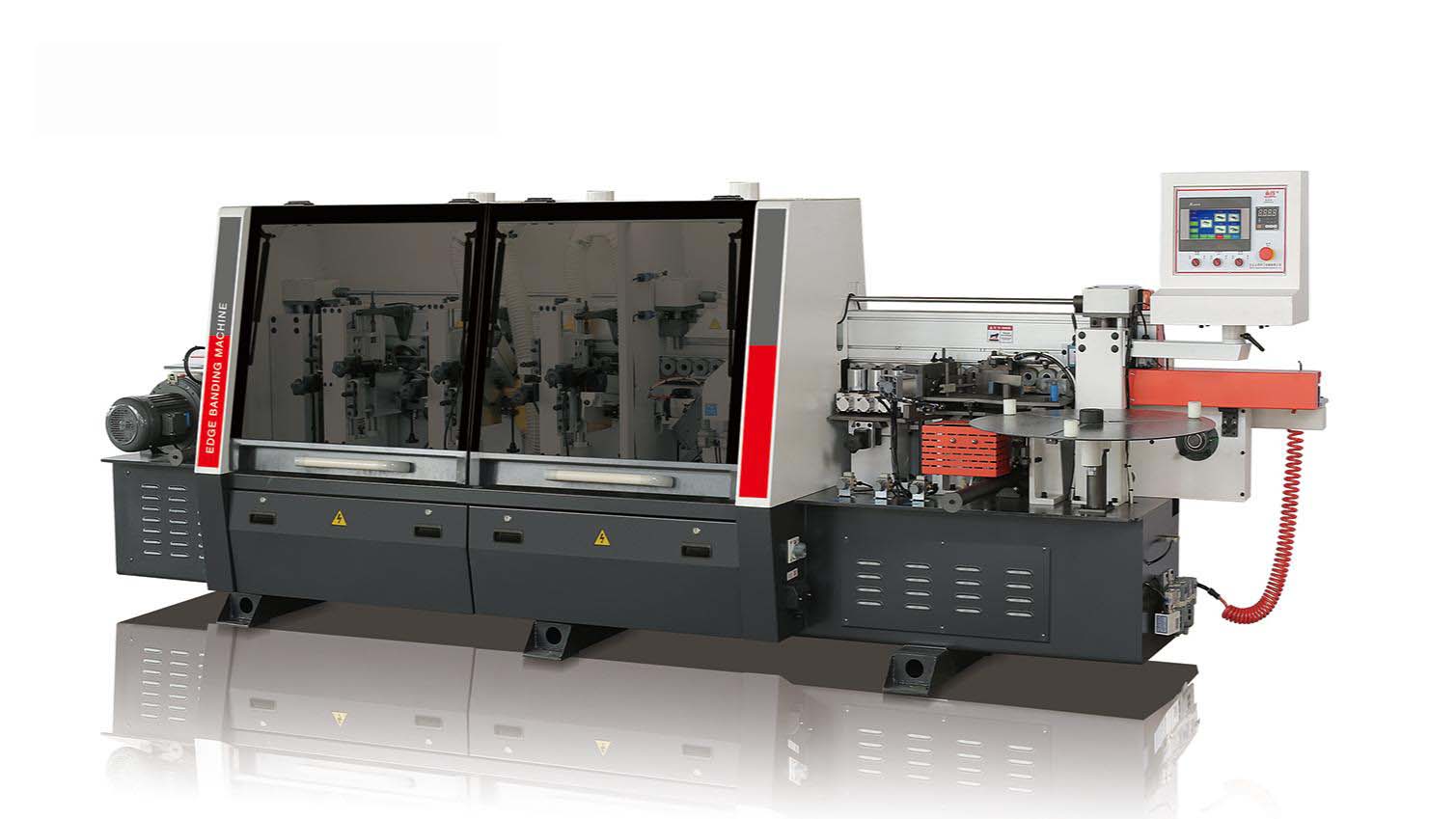
Build an MDF cabinet shortlist from the actual door and carcass families. Separate straight edges, rounded corners and 45° profiles, then map tape, glue, saw-cut condition, part size and required finish to the documented stations.
Classify the product mix
Doors, shelves, sides and decorative profiles may require different processing sequences.
Convert the category into a written line item, responsible party and acceptance point. This keeps the budget and technical comparison aligned across suppliers.
Use the smallest recurring part
Minimum panel dimensions can exclude a machine even when the largest panel fits.
Convert the category into a written line item, responsible party and acceptance point. This keeps the budget and technical comparison aligned across suppliers.
Test visible finishes
Agree representative panels and inspect ends, faces, corners and glue line before approving the configuration.
Convert the category into a written line item, responsible party and acceptance point. This keeps the budget and technical comparison aligned across suppliers.
Build a decision record
Save the panel and tape data, drawings, revised quotation, option list, test criteria, images and meeting notes under the exact model and revision. This record reduces disagreement when production, inspection, packing and commissioning occur at different times.
Move from research to a quotation
Send the requirements that are known and mark the rest for supplier confirmation. A precise list of unknowns is more useful than a complete-looking form filled with assumptions.